Global truck makers are driving through the most sweeping transformation the industry has ever faced. The world wants cleaner, smarter, connected trucks – immediately. But manufacturers must reinvent the future while still running the present.
Truck OEMs are investing in multiple technologies at the same time: electric powertrains, hydrogen fuel cells, autonomous systems, and connected digital services. Each requires more investments in R&D, new suppliers, fresh validation processes, and parallel support for existing diesel operations that still fund the transition.
Meanwhile, costs are rising and unpredictable. Batteries, semiconductors, motors, and hydrogen components are expensive and linked to volatile global supply chains. Localisation pressures in different regions add another layer of complexity, making it harder to keep trucks affordable for fleet operators.
Regulations only heighten the challenge. Emission norms, digital compliance, safety requirements, and charging standards differ across countries. For instance, a truck built for Europe can’t be sold in the US or India without major changes – forcing OEMs to balance global platforms with local rules.
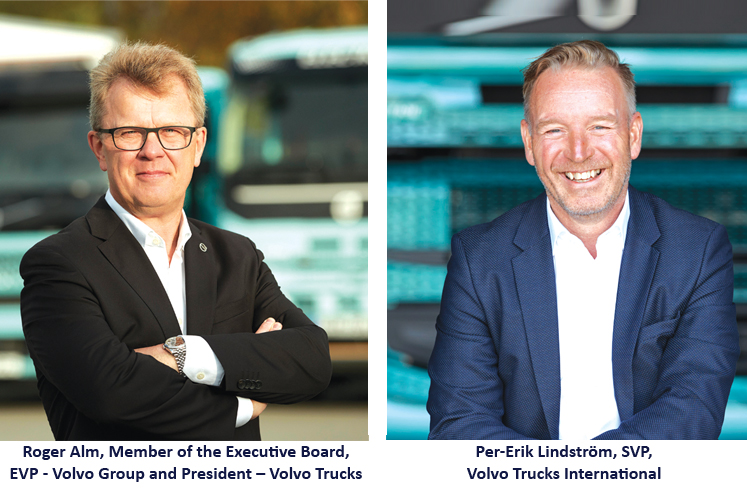
For Volvo Trucks, however, these challenges build resilience and agility. Each hurdle pushes the company to innovate faster and design trucks that lead the shift towards a cleaner, smarter and more connected future, said, Mr. Roger Alm, Member of the Executive Board, EVP – Volvo Group and President – Volvo Trucks.
Solving Challenges, One Innovation at a Time
Speaking to this publication, Mr. Alm said, innovation in trucking has never been simple. From the first Volvo truck in 1928 to the advanced machines of today, every breakthrough has come with challenges. New technology must not only work – it must deliver enhanced uptime, efficiency and real value to the customer. “Taking on these challenges is part of the journey. The company learns, adapts and improves, which is why customers continue to trust the brand across markets,” he explained.
For Volvo Trucks, a major focus today is sustainability. The OEM is already offering trucks made with green steel, both in frames and in cab structures. Customers can choose these variants, and demand is rising – especially for electric trucks, though green steel is also available in diesel models, he said. These changes are part of a broader strategy: “reduce emissions not just from trucks on the road, but from the materials used to build them.” Volvo plans to keep expanding this effort, step by step, proving that heavy-duty trucks can be “tough, efficient and planet-friendly at the same time,” he said.
New Trucks, New Technologies, New Possibilities
Volvo Trucks’ product journey, according to him, has been a steady climb – each step pushing capability, efficiency, and sustainability further. In India, Volvo started with rigid trucks and gradually shifted to tractor–trailers, giving fleet operators the flexibility to interchange trailers and maximise utilisation. Operations that once averaged 12,000 km a month now reach nearly 25,000 km, proving how technology, telematics, and better driver support have transformed productivity on Indian routes.
Fuel evolution has followed the same path. After diesel came LNG-powered trucks, and now Volvo has secured approvals for LNG road trains on select corridors – a major step in long-haul efficiency.
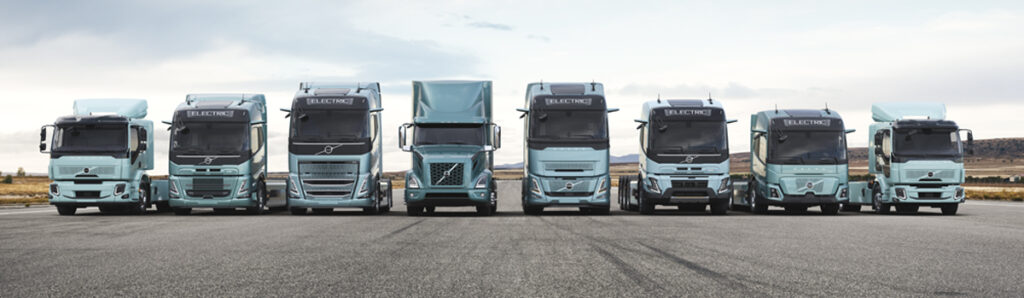
Globally, for the OEM, the pace of innovation is even faster. In 2019, Volvo rolled out its first medium-duty electric trucks. By 2020, a completely new range of cab-over trucks was introduced, followed by eight electric truck models entering series production. Last year, the truck maker launched two entirely new product families – one for cab-over markets and another for North America’s conventional trucks, he noted.
Mr. Alm said, across continents, the mission remains the same: introduce trucks that are more efficient, more sustainable, and safer – whether powered by diesel, LNG, or electricity. Volvo’s roadmap shows that the future of heavy transport isn’t a single leap, but continuous innovation, one milestone at a time.
Turning Disruption into Opportunity
The biggest transformation in decades, for the global truck players, include zero-emission powertrains, digitalisation, and higher safety expectations, that are redefining what a modern truck should be. For Volvo Trucks, these shifts aren’t roadblocks, instead, they are opportunities, he said, explaining that the company’s journey began in 1928; nearly 100 years and 4.2 million trucks later, the company still anchors its progress on one principle: innovate in ways that benefit everyone. The seatbelt – invented by Volvo and deliberately left without a patent so the entire world could use it – is proof of that mindset, he pointed out.
Today, the vehicle maker applies the same thinking to sustainability. Electrification, renewable fuels, and efficiency improvements are seen as different paths leading toward the same goal: cleaner, smarter transport. Since launching its first electric truck in 2019, Volvo has delivered over 5,500 electric trucks to 50 countries, including in India, collectively logging more than 250 million km. Every kilometre strengthens the case that zero-emission freight is not just possible, but practical.
Even as Volvo pushes hard on electrification, it continues to refine diesel technology. Last year, the company launched brand-new product ranges across Europe, North America and global markets – trucks that are more aerodynamic, more fuel efficient and more productive. Fuel consumption is down 10% in North America and 7% on the new FH Aero. Features like camera-based mirrors improve visibility and lower drag, helping fleets save fuel on every trip, he explained.
According to Mr. Alm, the company’s approach is simple: innovate continuously, reduce emissions wherever possible, and keep improving diesel while accelerating electric. The transformation of trucking is already underway – and Volvo wants to lead from the front, he said.
Staying Close to Customers, Everywhere
Volvo believes that the best way to build the future of trucking is to build it with the customer. The company’s first rule is simple – stay close. The OEM constantly meets fleet operators, listens to their challenges, and designs products that fit real business needs. With over 2,300 sales and service touchpoints worldwide and one million connected trucks generating live data, it helps customers improve uptime, efficiency, fuel use and profitability.
For Volvo, a truck is not just a machine; it is someone’s workplace. Drivers spend entire days – sometimes nights – inside the cab. So, it designs cabins to feel like safe, comfortable living spaces, ensuring better productivity and lower fatigue.
Collaboration is another key pillar. While Volvo and Daimler are fierce competitors in the marketplace, they also partner where it makes sense – on fuel-cell development. Similarly, it has tie-ups for charging infrastructure, and software-driven vehicle platforms. These joint efforts accelerate innovation without diluting competition, he added.
On the software side, Volvo sees a huge shift ahead, said, Mr. Per-Erik Lindström – SVP, Volvo Trucks International. Trucks will increasingly operate as “software-defined vehicles,” with more intelligence and connectivity onboard to maximise asset utilisation. Unlike cars, trucks are business tools – the more insights and automation they have, the more profitable they become for the operator. Volvo is working towards that goal, though it says full-scale rollout will take time.
Looking ahead, Mr. Alm said, the company doesn’t believe in one single fuel. Alongside electric trucks already running in 50 countries, Volvo is testing hydrogen trucks and fuel-cell systems, with customer pilots planned towards the end of this decade. The idea is clear: different routes and industries will need different zero-emission solutions.
Whether it’s through data, digital services, or new energy technologies, the truck maker’s goal never changes – make customers more productive, and the future of transport more sustainable, Mr. Alm signed off.