Nearly $26 billion in new opportunity is emerging, fuelled by innovation in products, technology and customer engagement.
The global luxury car market is entering a new phase—one where tradition is no longer enough. For decades, luxury cars were defined by brand legacy, craftsmanship and performance. But today, that definition is evolving. Technology, electrification and changing customer expectations are quietly reshaping what luxury truly means.
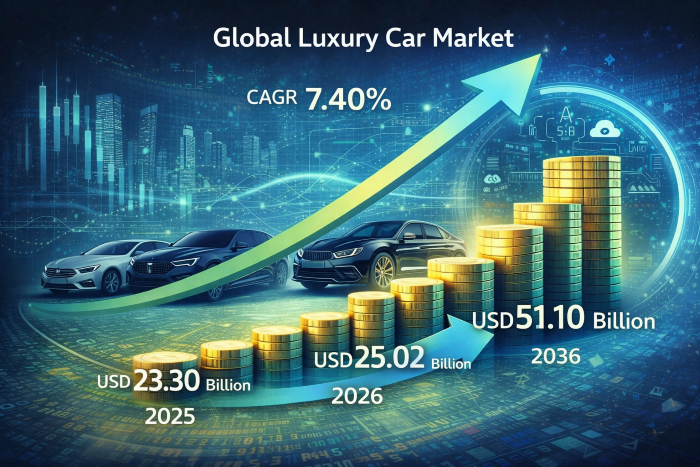
The numbers clearly reflect this shift. According to the latest analysis by Future Market Insights, a leading provider of market intelligence and consulting services, serving clients in over 150 countries, the market, valued at around $23.3 billion in 2025, is expected to grow steadily to $51.1 billion by 2036. This growth, at a CAGR of 7.4%, is not just about volume—it signals a deeper transformation.
The luxury car market is evolving beyond traditional definitions of prestige and performance. Electrification, connectivity, and personalised ownership experiences are redefining what luxury means in the modern automotive era. As competition intensifies and consumer expectations rise, the ability to innovate across technology, distribution, and design will determine long-term success, the report noted.
At the centre of this change is electrification. Almost every major luxury carmaker is now accelerating its electric vehicle plans. This is no longer a future strategy—it is a present necessity. The rise of EV-native players and increasing regulatory pressure are pushing traditional brands to rethink their portfolios. Luxury is now as much about silent performance, smart software and sustainability as it is about design and driving dynamics.
Major Shift
Another major shift is coming from how cars are sold. Automakers are moving closer to customers through direct-to-consumer models. This allows them to control the buying experience, build stronger relationships and protect margins. In a segment where experience matters as much as the product, this change is becoming critical.
At the same time, competition is intensifying, especially from China. As the world’s largest luxury car market, China is not just a demand centre anymore—it is also becoming a source of strong competition. Domestic brands are rapidly improving in technology and pricing, challenging established global players on their home ground.
Despite these changes, some traditional trends still hold strong. Sedans continue to dominate with nearly 47% share, driven by executive demand and legacy appeal. Gasoline powertrains still lead, supported by infrastructure and performance preferences. However, this balance is slowly shifting. SUVs and electric vehicles are steadily gaining ground, especially in fast-growing markets.
Regionally, growth is being driven by emerging economies. China continues to lead with strong momentum, while India is quickly rising as a key market, supported by increasing affluence and urbanisation. Germany remains an innovation hub, while markets like the US, UK and France offer steady, mature growth, Future Market Insights highlighted.
Within this evolving landscape, the competitive field is a mix of heritage and innovation. Brands like BMW, Mercedes-Benz, Porsche, Rolls-Royce, Ferrari and Bentley continue to define the segment, but the rules of competition are changing. Today, success depends not just on legacy, but on how well a brand integrates technology, offers personalisation and adapts to new mobility trends.
For automakers, the message is to invest in electric platforms, strengthen digital capabilities and build closer customer relationships. For dealers, the shift towards hybrid and direct sales models is becoming unavoidable. For investors, the focus is increasingly on companies leading in EV innovation and digital ecosystems.
What makes this moment significant is that the luxury car market is no longer just growing—it is transforming. The idea of luxury is moving beyond ownership to experience, beyond performance to intelligence, and beyond tradition to innovation.
For forward-looking stakeholders, the luxury car market represents not just steady growth—but a transformation towards a more digital, sustainable, and experience-driven future of mobility, the report concluded.