India’s logistics story has often been told through scale; more trucks, more warehouses, more pin codes. RapidShyp’s narrative, however, is unfolding at a different layer. It is about intelligence sitting quietly behind the scenes, helping sellers take sharper decisions in real time. For Mr. Ravi Goel, CEO, RapidShyp, this shift has been deeply influenced by the long legacy of OM Logistics and the gaps they saw emerging in a fast-digitising commerce ecosystem.

OM Logistics traces its roots to the early 1980s, when India’s automobile industry was just finding its feet. Founded when Maruti Suzuki entered the Indian market, the company began by building specialised vehicle transportation solutions to move cars across the country. From a single truck, it steadily scaled over four decades into a nationwide logistics major with more than 5,000 company-owned vehicles, over 700 branches, and in excess of 25 million sq ft of warehousing space.
“OM Logistics grew alongside India’s manufacturing ecosystem; automobiles, textiles, FMCG and several other sectors became part of that journey over time,” says Mr. Ravi Goel. “For decades, the focus was clear; move cargo efficiently at scale.”
Yet, as e-commerce began reshaping demand patterns, a clear gap started emerging. OM Logistics was strong in B2B cargo movement, but last-mile, small-parcel delivery required a very different operating model.
Seeing the Missing Piece in Last-Mile Logistics
As OM Logistics continued serving large manufacturers and enterprises, some of its customers began facing challenges in fulfilling direct-to-consumer orders. The last mile demanded two-wheelers, hyperlocal reach and far more granular decision-making than traditional logistics systems were built for.
“Last-mile deliveries are not about trucks and warehouses alone; they are about speed, choice and visibility,” explains Mr. Goel. “We realised that building another physical network was not the only answer.”
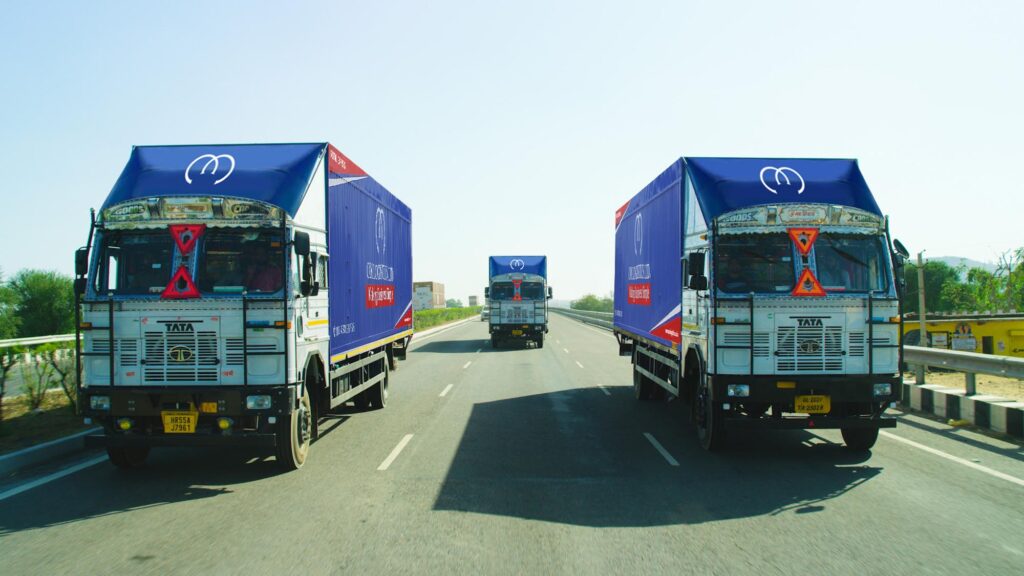
This realisation led to the birth of RapidShyp. Conceived about two years ago and operational for the past year, RapidShyp was designed as a digital platform rather than an asset-heavy logistics company. Instead of owning delivery infrastructure, it brought together multiple courier partners under a single intelligent layer.
Today, RapidShyp is integrated with nearly 16 courier partners, including India Post, offering e-commerce sellers multiple shipping options across the country. “We wanted sellers to choose what works best for them on a shipment-by-shipment basis,” Mr. Goel notes. “Flexibility is critical in today’s market.”
The platform now serves around 1,500 active sellers, with nearly 60 to 70 percent coming from the SMB segment, many of them early-stage D2C brands.
Moving Beyond Fulfilment to Decision Intelligence
RapidShyp’s real differentiation lies not in aggregation, but in intelligence. Mr. Goel believes that the next competitive edge in logistics will come from AI-led decisioning rather than simply adding more assets.
“Logistics intelligence is about helping a seller decide which courier to use, when to ship, and whether an order should even be shipped at all,” he says. “Those decisions directly impact profitability.”
One of RapidShyp’s core offerings is its AI-powered courier recommendation engine. For a seller shipping a parcel from Delhi to Mumbai, the platform analyses cost, historical performance, and current on-ground conditions to suggest the most reliable and economical courier.
“Our system does not just rely on past data; it factors in live disruptions like manpower shortages, regional delays or weather-related issues,” Mr. Goel explains. “A seller may not see these signals, but the platform does.”
This dynamic intelligence helps avoid delays, failed deliveries and cost overruns, issues that often surface too late in traditional systems.
Tackling the Biggest Pain Point; RTOs
Returns to Origin, especially in cash-on-delivery orders, remain one of the biggest challenges in Indian e-commerce. Industry-wide, 30 to 40 percent of COD orders are returned undelivered, eroding margins for sellers.
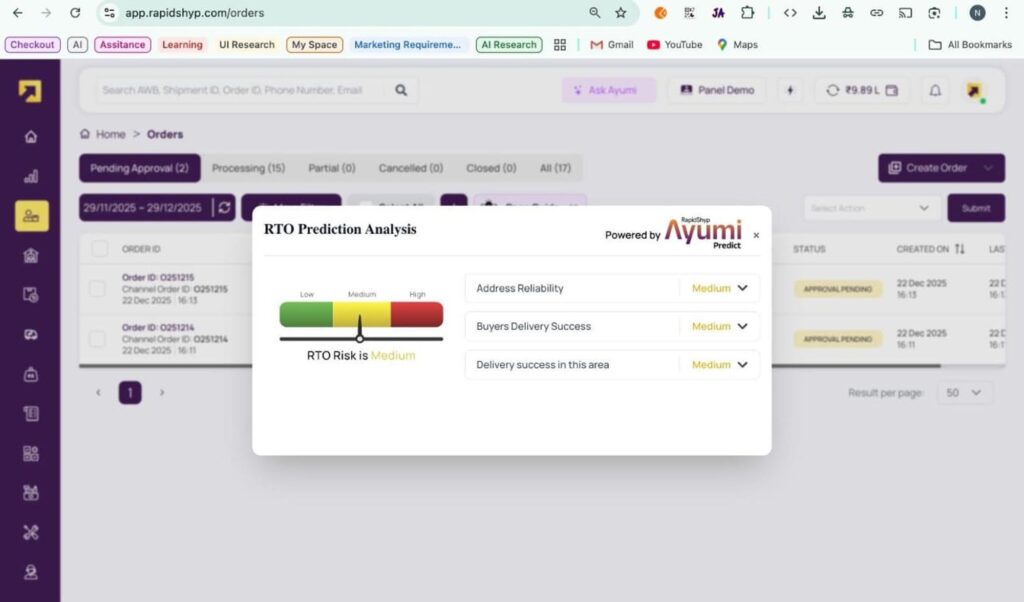
To address this, RapidShyp developed Ayumi Predict, an AI-based risk scoring tool that estimates the probability of an order being delivered successfully. Built on millions of data points, the model helps sellers identify high-risk orders before dispatch.
“If the risk is high, the seller can verify the order with the customer or take corrective steps before shipping,” says Mr. Goel. “That alone can save significant forward and reverse logistics costs.”
Another insight came from analysing undelivered shipments. Often, failed deliveries were marked simply as customer unavailable, even though the buyer might still want the product. RapidShyp’s Delivery Pro tool captures real-time feedback from customers and relays it to courier partners for reattempts at preferred time slots.
“With this feedback loop, we are able to recover nearly 50 percent of shipments that would otherwise return,” Mr. Goel notes. “These are small interventions, but they have a large financial impact.”
Data-Led Insights for Smarter Growth
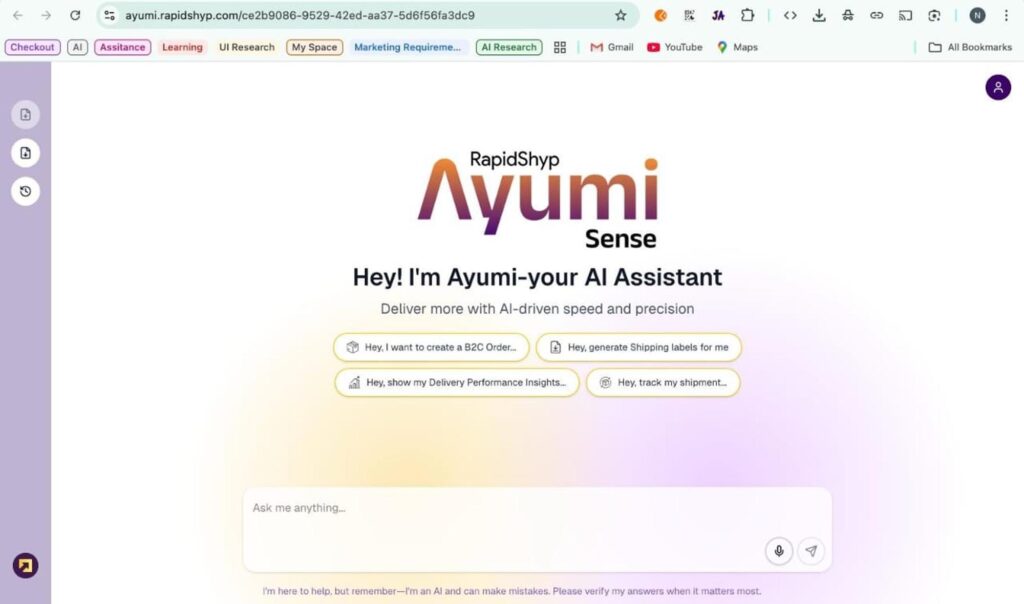
Beyond operational fixes, RapidShyp’s platform also helps sellers understand which products perform well and which silently drain resources. Its Ayumi chatbot, built on an LLM framework, allows sellers to query delivery performance, courier reliability and product-wise acceptance rates.
“Every seller has a few hero products; the rest may actually be hurting margins,” Mr. Goel explains. “When sellers see this clearly, they can adjust pricing, marketing spend or even discontinue certain SKUs.”
Early adoption suggests tangible benefits. Logistics costs, typically around 8 to 10 percent of sales, and customer acquisition costs, often 15 to 20 percent, can be significantly optimised when shipping decisions are data-driven.
“Our data shows a 35 to 40 percent difference in delivery success rates between high-risk and low-risk orders,” Mr. Goel says. “That insight alone can transform a seller’s profitability.”
Backed by Legacy, Built for the Future
While RapidShyp operates independently, OM Logistics continues to play a crucial supporting role, especially in B2B cargo movement and on-ground issue resolution. The cargo services on RapidShyp’s platform are powered by OM Logistics, ensuring execution strength behind the digital layer.

“OM’s nationwide presence helps us discover sellers beyond metro markets and resolve ground-level challenges quickly,” Mr. Goel shares. “At the same time, the technology we build at RapidShyp feeds back into OM Logistics, making the legacy business future-ready.”
Looking ahead to FY26 and FY27, RapidShyp plans to expand its product portfolio further. Forward and reverse shipping, reverse QC, B2B cargo, and upcoming hyperlocal and dark-store models are all in development, driven largely by seller feedback.
“Our goal is simple,” Mr. Goel concludes. “We want sellers to stop worrying about RTOs and delivery uncertainty. We cannot make these problems disappear overnight, but we promise to fight them alongside our customers, using intelligence, not guesswork.”
In a sector long defined by physical scale, RapidShyp’s journey signals a quiet but significant shift; from moving parcels to empowering decisions, one shipment at a time.