The FY2025–26 sales performance across India’s passenger vehicle makers reveals a market clearly split between scale-driven leaders and fast-moving challengers. While the top players continue to consolidate their dominance through volume, exports and portfolio depth, the real story of the year is the SUV-led disruption—led strongly by Mahindra & Mahindra alongside Tata Motors.
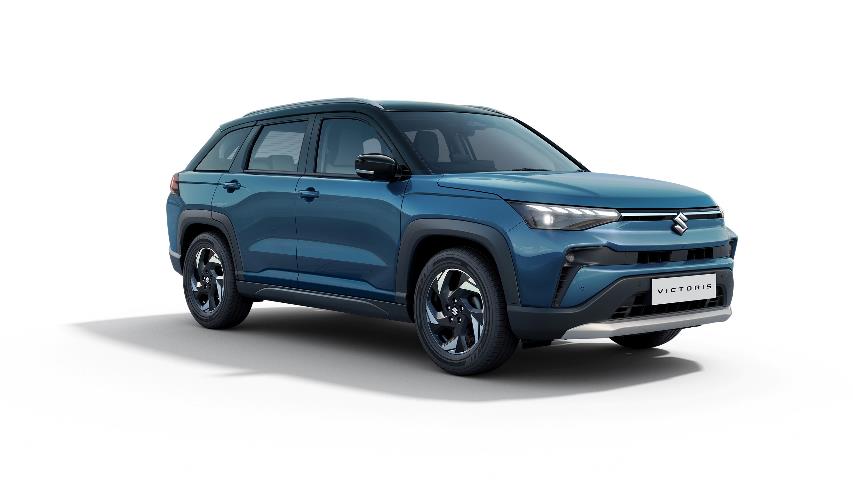
At the top, Maruti Suzuki remains firmly in a league of its own. Crossing 2.42 million units for the third consecutive year, the company’s strength lies in its unmatched scale, balanced portfolio and strong export engine. Its growth is broad-based—compact cars, SUVs and exports all contributing—giving it a level of resilience that competitors are still building.
However, the most significant competitive pressure is coming from Mahindra & Mahindra, which has emerged as the strongest SUV-led challenger. With over 6.6 lakh SUVs sold in FY26 and a sharp 25% growth in March 2026 (60,272 domestic units), Mahindra is redefining the market with a pure-play SUV strategy. Models like Scorpio-N, Thar and XUV 7XO are driving strong demand, positioning the company as a dominant force in one of the fastest-growing segments. Unlike Maruti’s diversification, Mahindra’s focused SUV play is proving equally powerful.

Tata Motors represents another dimension of growth—technology-led transformation. With over 641,000 units and 15% growth, Tata is riding on SUVs while simultaneously leading India’s EV transition. Its EV sales crossing 92,000 units, with 43% growth, underline its early-mover advantage in electrification. Tata’s strategy is less about scale alone and more about shaping future mobility.
Hyundai continues to play the role of a steady, consistent performer. Its 8.7% quarterly growth and record domestic sales reflect strong execution and brand strength. However, it is increasingly being squeezed between Tata’s EV push and Mahindra’s SUV dominance, while also facing Maruti’s scale advantage.
Kia and Toyota are emerging as strong, focused challengers. Kia’s double-digit growth and record-breaking sales highlight its strength in design, features and safety-led positioning, while Toyota’s 20% annual growth reflects the success of its SUV/MPV lineup and hybrid strategy. Toyota is also strengthening its export play, aligning with global trends.
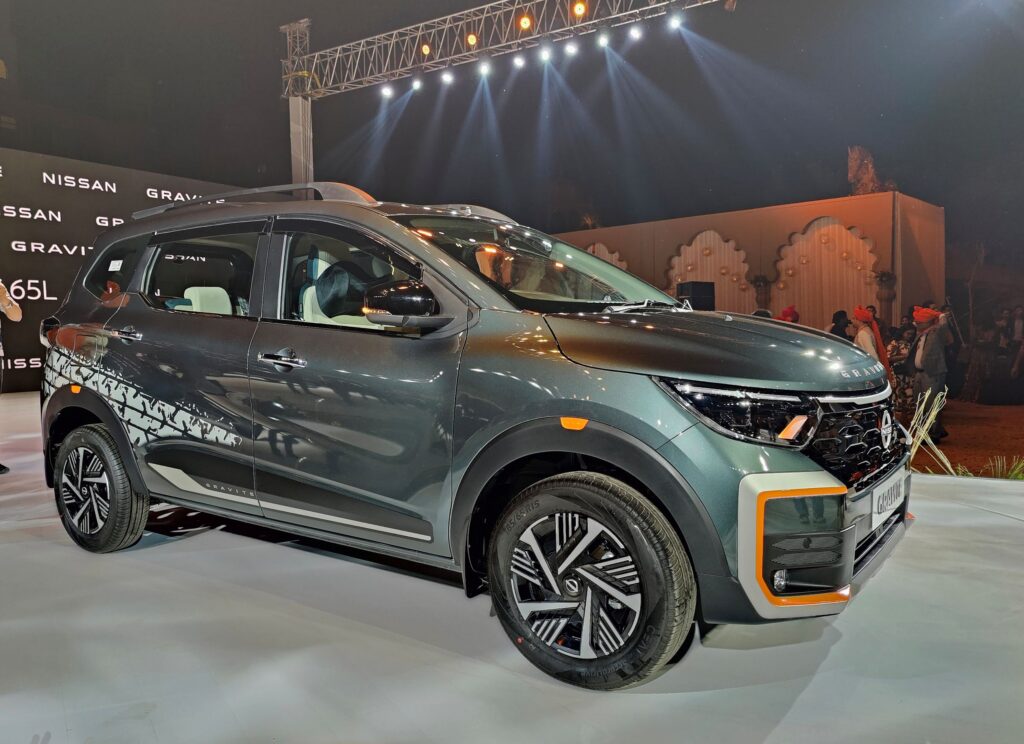
Among the smaller but evolving players, JSW MG Motor, Nissan and Renault are showing signs of revival. MG’s 19% growth indicates steady traction across ICE and NEV portfolios, though pricing pressures remain a concern. Nissan is witnessing a product-led recovery, with the GRAVITE and Magnite boosting domestic volumes. Renault, with a sharp 77% growth in March, is clearly in a turnaround phase, supported by refreshed models and the return of the Duster.
Honda, meanwhile, remains stable but constrained. Its modest 5% growth highlights steady demand, but limited portfolio expansion and declining exports indicate the need for stronger product action. Its planned EV entry could be a critical inflection point.
A few clear trends cut across all players. SUVs are now the undisputed growth engine of the Indian PV market, driving volumes for almost every OEM—from Mahindra and Tata to Kia, Toyota and even Renault. Electrification is gaining pace but remains concentrated, with Tata leading and others gradually scaling up. Exports are becoming increasingly important, particularly for Maruti, Hyundai and Toyota, as companies look to balance domestic cycles.

At the same time, product cycles are becoming sharper and more decisive. The success of Mahindra’s SUV lineup, Nissan’s GRAVITE, Renault’s Duster and Kia’s Seltos refresh shows how strongly the market is responding to new, well-positioned products.
Overall, FY26 reflects a market at a clear inflection point. Maruti continues to dominate on scale, Mahindra is rewriting the rules in SUVs, and Tata is leading the shift towards electrification. The next phase of growth will be defined by how well companies can balance volume, technology and speed—while staying sharply aligned to evolving customer preferences.